
The open standard to measure ecosystem health
The Ecosystem Integrity Index (EII) is a scientifically robust, globally applicable, and high-resolution metric that synthesizes the three fundamental pillars of ecosystem health: function, structure, and composition. Based on the Hill et al. (2022) framework. Now open source.
Codebase
Explore and fork the codebase for your use, contribute improvements.
Whitepaper
Read the paper, cite it in your work, contribute improvements.
Dataset
Access current-state mapping at 300m resolution.
API
Easily access the data through a python API.
The EII combines three metrics to provide a holistic evaluation.
The EII algorithm applies a "limiting factor" principle. The final score is constrained by the lowest-performing dimension, ensuring that an ecosystem with high productivity (like a plantation) cannot mask a critical loss of biodiversity or structural connectivity.
Start using the EII today.
Use the EII in your applications and contribute to the code that standardizes how nature is measured.
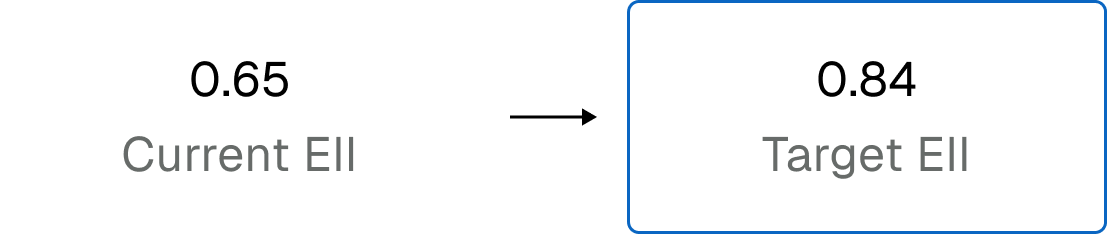
Use the EII in your reporting to set targets and provide a comparable, trustworthy measure of ecosystem health to your stakeholders.
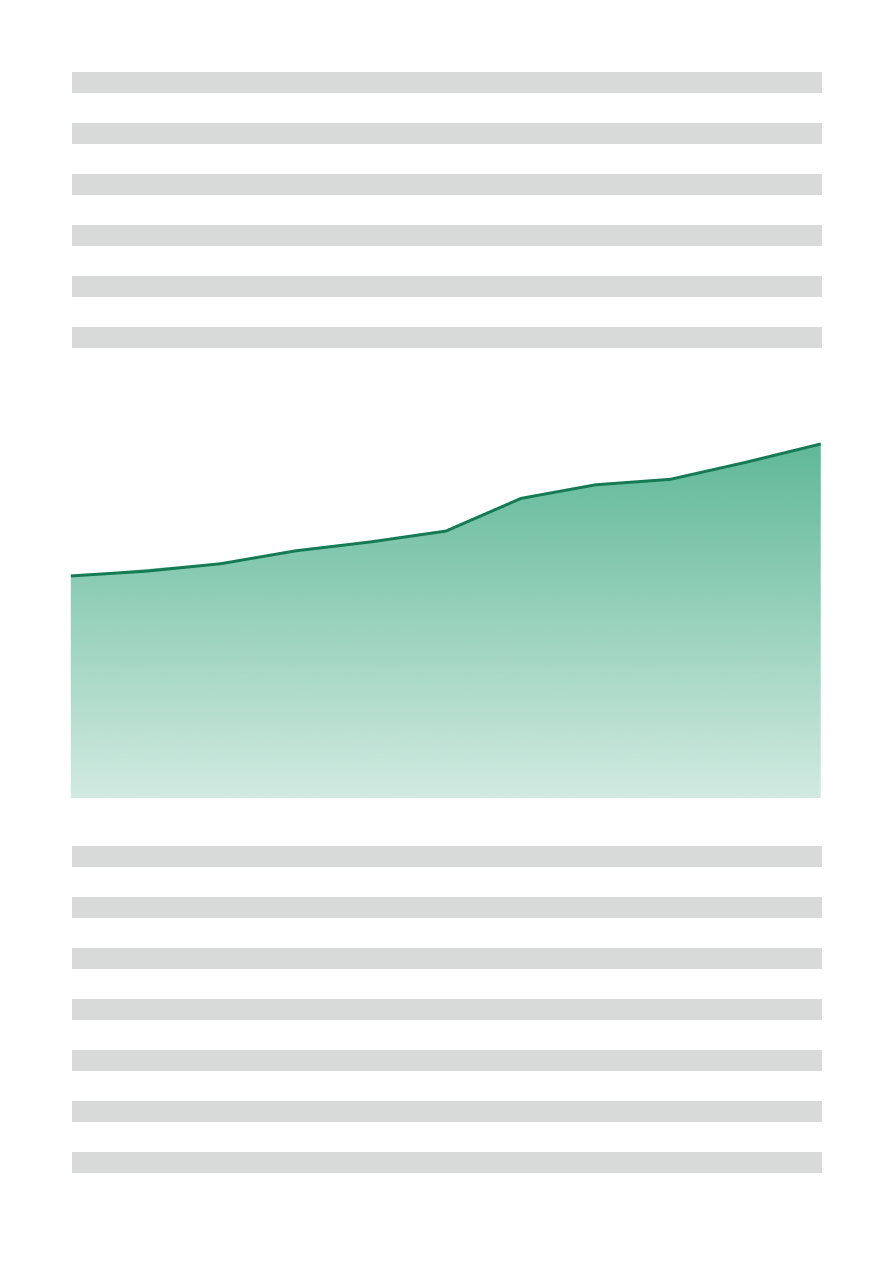
Leverage the EII for your research and contribute to improving the framework.
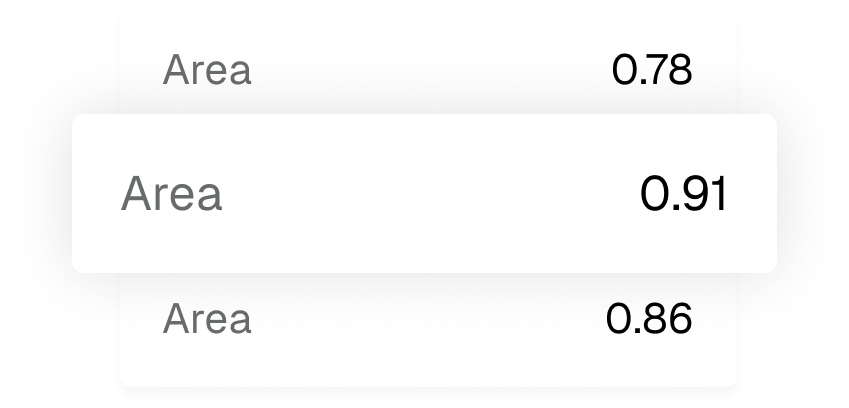
Identify priority areas for protection by distinguishing resilient ecosystems from those under hidden pressure.
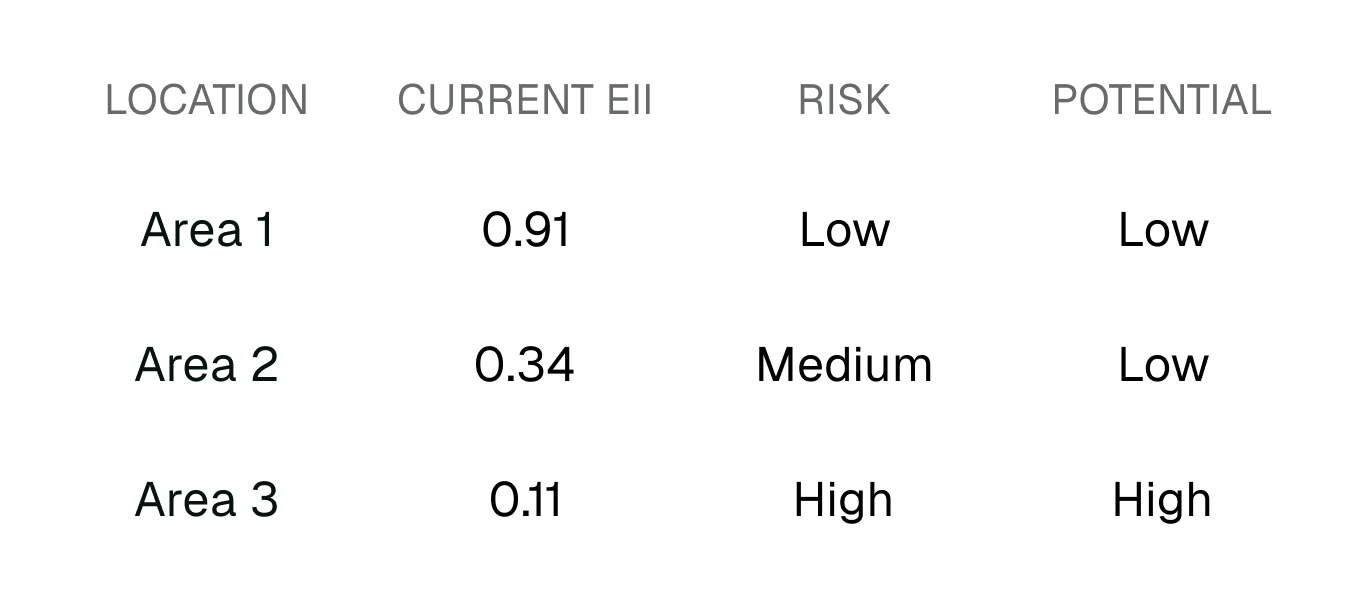
Inform nature-related risk assessments and guide investment towards nature-positive outcomes.
FAQ
What is the Ecosystem Integrity Index?
The Ecosystem Integrity Index (EII) is a tool that measures the health of land-based ecosystems across the globe. It combines three key aspects of nature—physical structure, species diversity, and biological function—into a single, easy-to-understand score.
What scientific framework is this based on?
This index is built directly on the framework developed by Hill et al. (2022) at the UN Environment Programme World Conservation Monitoring Centre (UNEP-WCMC). We took their scientifically rigorous model and scaled it up to create a global, high-resolution index (300-meter scale), making the theoretical framework actionable for real-world use.
Why was this index created?
Most current tools only look at one side of the problem. They either measure human activity (like building roads) or the loss of species, but rarely both together. The EII fixes this by combining these different views into one complete picture, helping us understand not just what is happening to nature, but why.
Who should use the EII?
It is built for companies, banks, and conservation groups. It helps them assess environmental risks, track the progress of restoration projects, and report on sustainability goals with confidence .
What data goes into the score?
We assess ecosystem health using three pillars:
- Function: We measure how well the ecosystem performs vital tasks, like capturing energy from the sun. We do this by comparing actual plant growth (measured by satellites) to what would grow naturally in that location.
- Structure: We look at the physical landscape to see if habitats are large and connected or broken up by roads and cities. This uses global data on human activity.
- Composition: We estimate the variety of life in the area. This tracks whether the original native species are still present and abundant.
How do you calculate the final number?
We follow a simple rule: an ecosystem is only as healthy as its weakest part. If a forest has plenty of trees (good structure) but no animals (poor composition), the final score will be low. This prevents a good score in one area from hiding serious problems in another.